- Products
- Industrial valves
- Actuators
Actuators
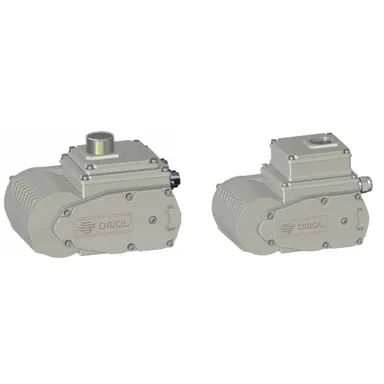
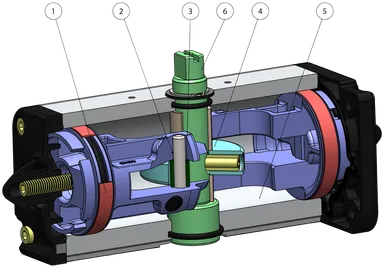
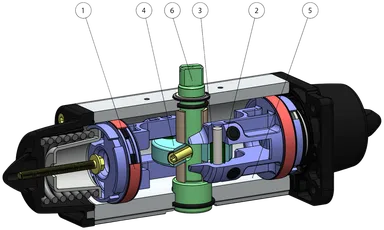
A valve actuator turns a ball or butterfly valve 90° open and closed on command from the control system when the valve cannot or should not be turned by hand. Where compressed air is available, a pneumatic actuator is the simplest solution. A spring-return model moves the valve to its fail-safe position if the air supply is lost; otherwise a double-acting model is sufficient. Without compressed air, choose an electric actuator, also available with a 4–20 mA positioner and battery backup. This category also includes hydraulic actuators.
The flange between the valve and the actuator is ISO 5211, and the pilot valve is mounted on the side of the actuator on the NAMUR interface. When the flanges or stems do not match, a mounting kit, mounting bracket or stem adapter is fitted in between. The actuator is sized according to the breakaway torque of the valve with a safety factor, and a spring-return actuator according to the spring torque. For position feedback there are limit switch boxes, and for explosive atmospheres there are ATEX-rated actuators and limit switches.
A small on/off valve without a separate actuator is a solenoid valve.
37 products